




Introduction
Micro-certifications are short, focused programs designed to quickly teach job-specific skills. With many employers valuing skills over degrees, these certifications can help you address skill gaps and improve career prospects by learning how to transfer your existing skills to new roles. However, not all programs are equally effective. Here's how to evaluate them:
- Identify Skill Gaps: Compare your current skills with job requirements using tools like self-assessments and job description analysis.
- Research Providers: Check for accreditation, industry partnerships, and employer recognition. Avoid programs with vague promises.
- Evaluate Content: Look for detailed, practical courses with hands-on learning and rigorous assessments.
- Measure ROI: Focus on certifications that align with your career goals and track outcomes like promotions or salary increases.
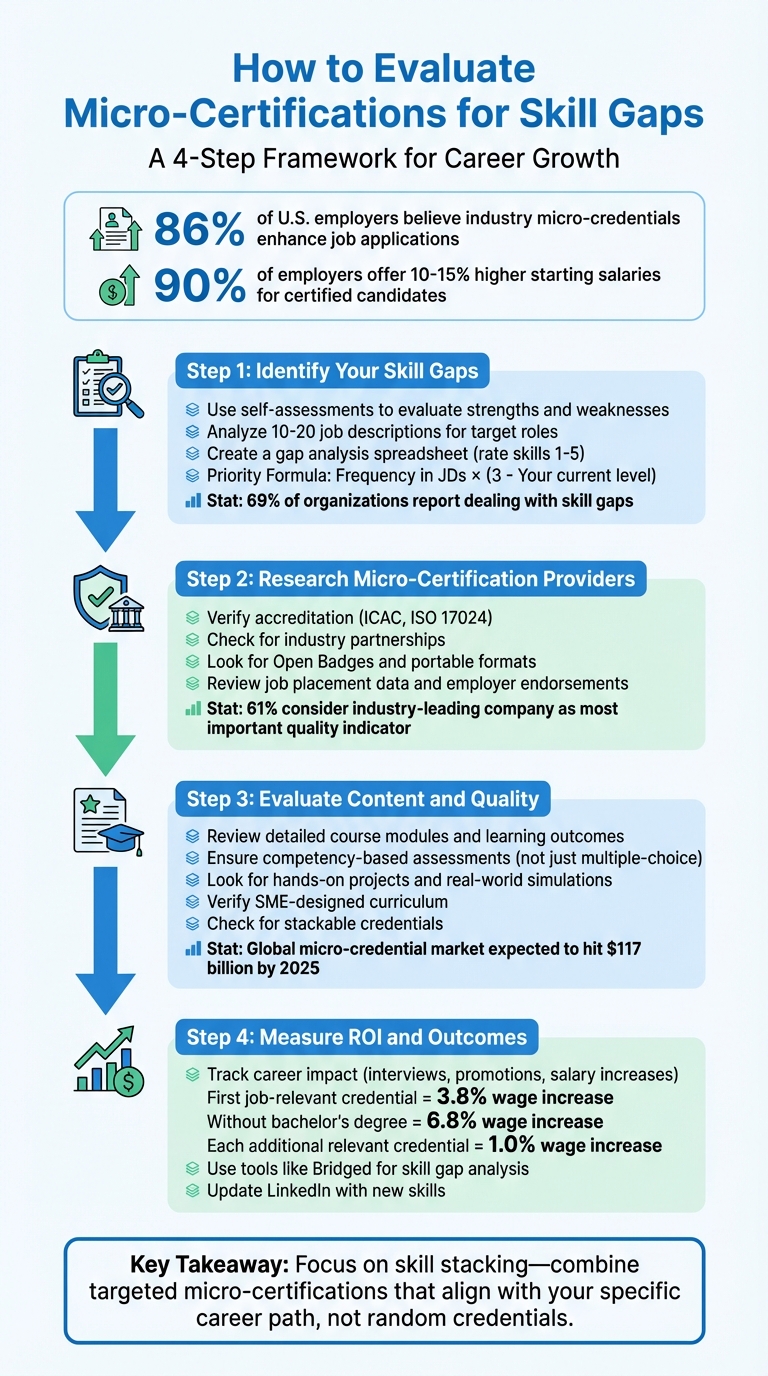
4-Step Framework for Evaluating Micro-Certifications
How Do You Assess The Quality Of Micro-credential Providers? - College Dropout Millionaire
Evaluating these providers is essential when choosing micro-certifications and specializations to advance your career.
sbb-itb-8dc0621
Step 1: Identify Your Skill Gaps
Before diving into a micro-certification, it's crucial to figure out exactly which skills you're missing. A skill gap analysis - a structured comparison of the abilities your desired role requires versus the ones you currently possess - is the logical starting point. Skipping this step could lead to pursuing certifications that don’t actually help your career.
And this isn’t just a personal challenge - 69% of organizations report dealing with skill gaps right now. To complicate things further, the same job title can demand entirely different skills depending on the industry. For instance, a project manager in healthcare will likely need a different toolkit than one in financial services. This is why a cookie-cutter approach won’t work; you need a tailored assessment.
Use Self-Assessments
Start by evaluating what you already know. Self-assessment is a great way to identify your strengths, weaknesses, and goals. Pay attention to your daily tasks and note areas where you struggle or feel less confident.
"Recognizing areas of improvement is not a weakness, but a crucial step for professional growth."
- Eloisa Fagundes, Career Consultant
One effective method is creating a gap analysis spreadsheet. List your current responsibilities alongside the requirements of your target role, then rate your proficiency on a scale from 1 (no experience) to 5 (expert mastery). This structured approach takes the guesswork out and helps you prioritize which gaps to address first.
Additionally, keep a journal of your daily wins and challenges. Over time, patterns will emerge, highlighting both technical and behavioral areas that need work. Since self-assessments can sometimes be biased, it’s helpful to get feedback from colleagues or mentors. They can often pinpoint "soft skills" you might overlook.
Once you’ve completed your self-assessment, compare your findings to the top skills employers are looking for in your industry.
Analyze Job Descriptions and Industry Trends
Look at 10–20 job postings for roles you’re interested in. This will help you identify recurring skill requirements instead of chasing one-off "unicorn" demands. For example, if 15 out of 20 postings mention SQL, it’s a must-have skill. On the other hand, if blockchain is only mentioned in a few, it’s more of a bonus.
To streamline this process, you can use AI tools like ChatGPT. These tools can extract skills from job descriptions and organize them into a table with columns for Skill, Category (technical vs. soft), Frequency, and whether they’re Must-have or Nice-to-have. Cross-check these results with trusted resources like O*NET role profiles to ensure you’re using the right terminology.
Once you’ve gathered your list of skills, prioritize them using this formula:
Priority = Frequency in JDs × (3 – Your current level).
For instance, if "data analysis" appears in 80% of job postings and you rate yourself as a 1, the priority score would be 160 (80 × 2). Focus on the skills with the highest scores first. To simplify this, you can use the ultimate career platform to identify your transferable skills and find curated training. Looking ahead to 2026, top skills across industries are expected to include AI literacy, data analysis, and project management.
Finally, revisit this analysis every six weeks or after completing major projects to ensure you’re staying on top of industry trends. With recruiters spending an average of just 6 seconds scanning a resume, closing the right skill gaps - and showcasing them with relevant credentials - can make all the difference in landing your next opportunity.
Step 2: Research Micro-Certification Providers
Once you've pinpointed your skill gaps, the next step is finding a reliable certification provider. Here's the upside: 86% of U.S. employers believe that earning an industry-specific micro-credential enhances a candidate's job prospects. But not all certifications carry the same weight. Some programs may overpromise and fail to deliver, so it’s crucial to focus on those that genuinely add value to your career. This step builds on your skill gap analysis, steering you toward certifications that make a real difference.
Verify Provider Credibility
Begin by checking if the provider has accreditation from reputable organizations like the International Certification Accreditation Council (ICAC) or follows standards such as ISO 17024. Accreditation ensures that the program meets established quality benchmarks and has been reviewed by independent experts.
Another key indicator of credibility is industry partnerships. High-quality certifications are often developed alongside leading employers or industry experts. For instance, in 2019, Mesa Community College in Arizona teamed up with Boeing to create a for-credit boot camp. This program included 36 hours of classroom training, and students who completed it - and passed a background check - were invited to interview with Boeing. Collaborations like this show that the certification is tailored to meet actual workforce needs.
Look for certifications that use Open Badges or other portable formats. These digital badges come with metadata that provides details about what you learned, how it was assessed, and who issued it. This transparency allows employers to verify your credentials with just a click. On the flip side, a lack of transparency is a warning sign.
"If it sounds too good to be true, it probably is."
- Julie Uranis, Senior Vice President of Online and Strategic Initiatives, UPCEA
Be wary of providers that make unrealistic promises, like guaranteeing six-figure salaries or endless job opportunities without offering concrete evidence. Shalin Jyotishi, Senior Adviser for Education, Labor, and the Future of Work at New America, warns, "Consumers should know that short-term credentials – the landscape is a landmine as opposed to a ladder to mobility". Always request data on job placement rates, salary improvements, or employer endorsements before committing to a program.
Once you've verified the provider's legitimacy, make sure their certifications align with the demands of your industry.
Evaluate Industry Alignment
The value of a certification depends on how well it matches your industry’s needs. In fact, 61% of respondents consider whether a micro-credential comes from an industry-leading company to be the most important quality indicator. Certifications from respected providers in your field are more likely to enhance your career.
To gauge alignment, review current job postings for mentions of the certification or provider. If you see it listed as "required" or "preferred" across multiple job descriptions, that’s a clear sign employers recognize its value.
Check whether the certification can be "stacked" - meaning it can count toward a larger credential, like a university degree or professional license. This flexibility adds long-term value and indicates the provider’s integration into broader educational pathways. Additionally, investigate the qualifications of the subject matter experts (SMEs) who designed the curriculum. Reputable providers will openly share the credentials of the professionals behind their programs.
Step 3: Evaluate Certification Content and Quality
Now it’s time to dive into the content itself and ensure it offers practical, job-ready skills you can put to use right away.
With a trusted provider in mind, your next step is to confirm that the curriculum aligns with industry needs.
Review Course Modules and Learning Outcomes
Start by asking for the full syllabus or course outline. Look for modules that focus on specific, actionable skills rather than vague or overly broad topics. For instance, a module titled "Building Regression Models in Python" is far more targeted and useful than one generically labeled "Data Science". This level of detail reassures employers about the exact skills you bring to the table.
Pay close attention to how the program measures your skills. Top-tier certifications emphasize what you can do, not just what you’ve learned. Ashley Miller, Program Manager at Digital Promise, puts it well:
"The most meaningful micro-credentials are competency-based. They require learners to demonstrate what they can do, not just what they know".
Look for certifications that include hands-on components like portfolio projects, real-world simulations, or peer-reviewed work instead of relying solely on multiple-choice tests.
Also, check whether the course was developed with input from industry professionals or employers. This collaboration ensures the curriculum stays aligned with current trends, includes regular updates, and offers stackable modules that can contribute toward larger credentials or degrees.
Finally, consider how the program ensures its assessments rigorously validate the skills it teaches.
Check Assessment Rigor and Credential Recognition
The way your skills are assessed is just as important as the skills themselves. Strong programs use authentic assessments that mimic actual workplace tasks. For example, if you’re studying welding, the final test might involve recording yourself completing a weld while explaining the process, rather than simply answering theoretical questions.
Make sure these assessments are reviewed by subject matter experts using clear, standardized rubrics, rather than relying on automated grading alone. This is especially important since nearly half (46%) of employers remain uncertain about the quality of education that micro-credentials represent. Rigorous assessments help bridge this confidence gap.
Look for certifications that use portable, standards-based formats like Open Badges 3.0. These badges include metadata that verifies your learning and makes it easier for employers to confirm your qualifications. With the global micro-credential market expected to hit $117 billion by 2025, having a certification in a recognized format is a smart move.
Before committing to a program, check job boards to see if the certification you’re considering shows up in listings for roles you’re targeting. If it does, that’s a strong indicator of employer recognition.
Ultimately, certifications that combine hands-on learning with rigorous assessments are essential for addressing your skill gaps and boosting your career prospects effectively.
Step 4: Measure Outcomes and Return on Investment
After carefully selecting your certification, it’s time to assess how it impacts your career and finances. The return on investment (ROI) of a certification is best measured by examining its influence on your job prospects, salary, and overall career growth.
The key factor here is job relevance. Data shows that earning your first job-relevant micro-credential can lead to a 3.8% wage increase, which is more than double the 1.8% increase associated with an irrelevant credential. For those without a bachelor’s degree, this wage premium jumps to 6.8% when the credential aligns with their job goals. In short, certifications that directly relate to your target role make a much bigger difference than simply accumulating credentials.
Analyze Career Impact
Look at how your certification has translated into tangible outcomes, such as new job interviews, promotions, or salary bumps within six months of completion. Be specific when describing these results. For instance, you could say that completing [Course Name] enabled you to automate a reporting process, saving your team five hours weekly, or that it helped you transition from a customer service role to UX research.
Statistics further reinforce this point: every additional job-relevant micro-credential adds an average 1.0% increase in wages, while irrelevant ones offer no measurable benefit. This emphasizes the importance of focusing on certifications that address the exact skill gaps you identified earlier.
Some companies are now embedding micro-credentials into their internal growth systems, linking them to promotions, pay increases, and bonuses. If your employer has such a structure, be sure to showcase your certifications during performance reviews as concrete proof of your skills.
Use Bridged for Skill Gap Analysis
Before investing in a certification, tools like Bridged can help you pinpoint the skills you need for your desired role in fields like Product, Marketing, or Engineering. Bridged analyzes your current abilities and identifies the specific gaps that need to be filled to reach your career goals.
This targeted approach eliminates unnecessary spending and ensures your investment directly addresses a required competency. Bridged also provides curated recommendations for certifications that match industry needs, helping you avoid wasting time and money on credentials that won’t advance your career.
After completing a certification, update your LinkedIn profile to include the specific skills you’ve gained. This boosts your visibility in recruiter searches and lets you use LinkedIn Premium’s comparison tools to see how your skills measure up against other candidates. Share your achievements on professional platforms and directly with decision-makers, emphasizing how these credentials have practical applications.
Conclusion
Selecting the right micro-certification requires careful planning and alignment with your career goals. Start by identifying the specific skills you need, researching reputable providers, and evaluating certifications that focus on measurable, job-relevant competencies. Pay close attention to the career outcomes associated with these credentials.
Here’s why this matters: 86% of U.S. employers believe industry micro-credentials enhance job applications. Additionally, nearly 90% of employers offer starting salaries that are 10% to 15% higher to candidates with recognized certifications. However, these advantages only materialize when the certifications align with the skills employers are actively seeking.
The key is intentionality. Instead of collecting random certifications, focus on skill stacking - combining multiple, targeted micro-certifications that collectively highlight your expertise in a specific role. Platforms like Bridged can help you identify skill gaps and recommend certifications tailored to your career path.
With the rise of skills-based hiring, your certifications should tell a clear, cohesive story about your professional growth. Start today: define your target role, verify the credibility of certification providers, and choose programs that build practical, project-driven skills.
FAQs
How do I know which skills I’m actually missing?
To figure out what skills you might be lacking, begin with a skill gap analysis. This involves using tools that match your current abilities against what’s in demand in your industry. These tools often provide personalized assessments for specific roles and rely on up-to-date job market data. Alongside this, review your measurable accomplishments and transferable skills. This will help you identify areas where you can grow, making sure your strengths align with the career path you’re aiming for.
What makes a micro-certification provider credible?
When choosing a micro-certification provider, it's important to look for one that ensures their credentials are verifiable, transferable, and recognized within the industry. The best providers focus on transparency, use rigorous evaluation methods, and align their offerings with current industry demands.
Trust is earned through consistent quality standards, thorough review processes, and clear frameworks for evaluating the credentials' impact. These practices show a strong commitment to upholding high standards and providing real value to learners.
How can I tell if a micro-certification will pay off?
When considering a micro-certification, focus on how it aligns with your industry and career goals. Start by checking if it's recognized by employers and addresses skills that are in demand. A good certification should offer verifiable credentials and demonstrate practical knowledge, helping to close any gaps in your expertise. By weighing these factors, you can determine if the certification is a smart investment for your professional growth.
Related Blog Posts


