




Introduction
Want to grow your career faster? Start with your manager's feedback. Combining their insights with a skill gap analysis can help you identify the exact skills you need to improve for your next promotion or career move. Here's the process broken down:
- What is Skill Gap Analysis? It's comparing your current skills to those required for your desired role, creating a clear plan to improve.
- Why Manager Feedback is Key: Managers provide specific, real-world input on your strengths and areas to improve, helping you focus on what matters most.
- Steps to Prepare for Feedback: Define role-specific skills, communicate your goals clearly, and use tools like skills matrices to organize feedback.
- Turning Feedback into Action: Use structured ratings, combine feedback with self-assessments, and prioritize gaps based on career impact.
What is Skills Gap Analysis? | How to Identify and Close Skill Gaps in Your Team
Preparing for Manager Feedback
Getting meaningful feedback from your manager requires preparation. Without a clear structure, these sessions can easily become vague and unproductive. The goal is to create a framework that helps your manager provide specific, actionable insights. This groundwork is essential for setting the stage for detailed feedback.
Define Roles and Skills
Before meeting with your manager, take the time to clearly outline the skills needed for both your current role and the next step in your career. This isn’t just about listing tasks from your job description - it’s about identifying the technical abilities, soft skills, and performance standards that separate good performance from great performance.
Start by reviewing your job description and researching the key skills required for your current position and your desired role. Many organizations are increasingly focused on pinpointing skills gaps, so understanding these areas is crucial.
You can use tools like industry competency frameworks or platforms such as Bridged to identify high-value skills and certifications for your target role. Bridged, for example, offers insights into lucrative career pathways and highlights the qualifications employers prioritize. Armed with this information, you’ll have concrete examples to discuss with your manager about how to grow in your role.
Document your findings by comparing the requirements of your current role with those of your desired position. This reference will help keep your conversations focused on the skills that matter most for your career growth.
Create Open Communication
Once you’ve mapped out your skill development needs, it’s time to communicate them clearly to your manager. For feedback to be effective, your manager needs to understand your goals and why this feedback is important. If your intentions aren’t clear, they may hold back from giving detailed insights.
Schedule a dedicated meeting rather than relying on a quick chat in passing. Be specific about what you want to achieve. For instance, instead of saying, "I want to improve", try something like, "I’m aiming for a senior developer role and would like to understand which technical and leadership skills I should focus on over the next 12 months."
Let your manager know you’re seeking honest, constructive feedback - not just compliments. Framing the conversation as a collaborative development session encourages them to engage more thoughtfully. You might even ask about their own career development experiences, which can deepen the connection and lead to more meaningful advice.
When approached this way, feedback becomes a tool for advancing your skills and moving closer to your career goals.
Use Standardized Tools
Structured tools can help ensure no important details are overlooked. A skills matrix or rating scale, for example, can quantify your abilities and make it easier to prioritize areas for improvement.
Develop a simple framework that lists the key skills for your current role and your target position. Use a 1–5 rating scale, where 1 indicates "needs significant development" and 5 represents "expert level." This approach highlights which skills need immediate attention (ratings of 1–2) and which areas require ongoing growth (ratings of 3–4).
Here are a few tools to consider:
| Tool | Key Benefit |
|---|---|
| Skills Matrix | Helps visualize skill gaps for better prioritization |
| Standardized Rating System | Provides a data-driven way to plan development |
| Structured Survey | Reduces bias and ensures a thorough evaluation |
Include space for qualitative comments alongside numerical ratings. For instance, your manager might rate your project management skills as a 3 but note that while you’re great at planning, your stakeholder communication needs work. These details are essential for creating a targeted development plan.
Keep the process straightforward - a one-page assessment covering 8–12 key skills is usually enough. The goal is to make it easy for your manager to provide thoughtful input without overwhelming them. Sending the framework a few days before your meeting gives them time to reflect and provide more useful feedback, rather than relying on spur-of-the-moment impressions.
Collecting and Organizing Manager Feedback
Once you've set the stage for productive feedback sessions, the next step is gathering and organizing that input. How you collect feedback plays a big role in its usefulness for identifying skill gaps. Without a clear system, valuable insights can slip through the cracks. Let’s dive into effective ways to gather and structure this feedback.
Methods for Collecting Feedback
Performance reviews are a staple for formal feedback. These typically occur annually or quarterly, offering a structured opportunity for skill assessment. However, they may not capture the nuances of daily work or recent challenges.
One-on-one meetings provide a more flexible and ongoing way to discuss progress and obstacles. Scheduling these sessions monthly or bi-weekly ensures feedback stays relevant and tied to recent projects or tasks.
The 360-degree feedback process expands the lens, bringing in perspectives from peers, direct reports, and other stakeholders beyond your manager. This approach is particularly helpful for evaluating skills like communication, leadership, and collaboration that others may observe differently.
Another option is using structured surveys that your manager completes between meetings. Tools with customizable templates can help ensure consistency and track specific skill areas over time. This method works well for monitoring progress on targeted skills.
Combining Numbers and Comments
The most effective feedback blends numerical ratings with written explanations. Numbers create clear benchmarks and make comparisons easier, while comments add context to the ratings and explain what they mean in practice.
For instance, a simple 1–5 scale works well: 1 for no experience and 5 for mastery. Comments can clarify each score. If your manager rates your project management skills as a 3, they might note that you’re strong in planning and organization but could improve your communication during project updates.
To keep everything organized, consider creating a document or spreadsheet that includes both the numerical ratings and detailed comments. This format allows you to spot trends and prioritize which skill gaps to address first. Consistency is key - using the same scale across all feedback sessions makes it easier to track progress over time.
Adding Other Data Sources
To validate and deepen the feedback, incorporate additional data like self-assessments, project outcomes, and certification results.
Self-assessments are a great way to compare your perspective with your manager’s. If there’s a big difference in how you both rate a skill, it’s worth digging deeper to understand why.
Project outcomes offer objective evidence to back up - or challenge - feedback ratings. For example, if your manager rates your troubleshooting skills highly but recent projects show recurring issues, there may be specific areas within that skill set that need improvement.
Skills assessments and certification results add another layer of validation. Platforms like Bridged can help you measure your skills against industry standards and identify certifications that are most valued in your field. This ensures your development aligns with market expectations.
Peer feedback is also valuable, as it provides insight into how you collaborate, handle conflicts, and communicate under pressure - areas your manager might not see firsthand.
To make sense of all this information, track it in a skills matrix. This tool helps you clearly identify and prioritize gaps. By integrating diverse perspectives into your matrix, you can create a more comprehensive and actionable development plan.
The aim isn’t to gather feedback from every possible source but to collect enough varied input to confidently pinpoint skill gaps. Two or three complementary sources are usually sufficient to strike a balance between thoroughness and efficiency.
sbb-itb-8dc0621
Analyzing Feedback to Find Skill Gaps
Turn feedback into a clear plan for growth by identifying skill gaps and prioritizing the areas that need attention.
Compare Feedback to Skills Requirements
Start by aligning the feedback you've received with the specific skills your role demands. A helpful way to do this is by creating a skills matrix - a simple chart that compares your current abilities to the skills required for your position. Use a consistent scale, like 1–5, to rate both your current skill level and the expectations for your role. This approach gives you a clear picture of where you stand and what needs improvement.
Make sure to include both technical and soft skills in your matrix. For example, alongside technical expertise like data analysis, include soft skills such as communication, leadership, and problem-solving. Once you’ve listed these skills, plot the feedback you’ve received (e.g., from your manager) against them. If your manager rates your data analytics at a 2 on a 1–5 scale, but the role requires a 4, the gap is clear.
To make this process even smoother, you can use tools like Bridged’s gap identifier. This tool compares your skills to industry standards and role-specific requirements, helping you pinpoint exactly where to focus your efforts.
Visual tools like this make it easy to spot development areas at a glance. For instance, if you see that your communication skills are rated at 3 while the role demands a 5, you know where to concentrate your energy.
Sort Feedback by Categories
Organize the feedback you’ve gathered into three clear categories: strengths, weaknesses, and development priorities. This structure helps you focus on what matters most.
- Strengths: These are skills where you consistently excel, with ratings in the 4–5 range. You can leverage these abilities immediately, and they might even position you to mentor others.
- Weaknesses: These are areas with low ratings (1–2). Not every weakness needs immediate attention, especially if it’s not central to your daily work.
- Development Priorities: These fall in the mid-range (3s) and are typically both important to your role and in need of improvement. For instance, if feedback frequently highlights communication challenges, this might become a focus area even if the numerical rating isn’t the lowest.
Once you’ve sorted your feedback, rank these gaps by their relevance to your career goals.
Rank Skill Gaps by Importance
With your skill gaps identified, prioritize them by considering their impact on your work, how often they’re used, their relevance to your career goals, and how long it will take to improve them.
Here’s how to evaluate skill gaps:
- Business Impact: Focus on skills that directly affect your team’s success. For example, if your team is moving to cloud-based systems and only one person has expertise in that area, learning cloud computing becomes a top priority.
- Frequency of Use: Skills you use daily should take precedence over those you only need occasionally.
- Career Trajectory: Look at your long-term goals. If you’re aiming for a leadership role, prioritize skills like strategic thinking and team development over purely technical ones.
- Time to Proficiency: Some skills can be improved relatively quickly, while others require more time and effort. Balancing quick wins with long-term goals keeps you motivated and shows steady progress.
Research indicates that 64% of learning and development professionals focus on closing skill gaps, emphasizing the importance of systematic prioritization. Using a point system to rank skills based on their business impact, frequency, and relevance can make this process more objective. This way, your efforts are focused on the areas that will deliver the greatest return for your career growth.
Creating Your Skill Development Plan
Once you've analyzed your manager's feedback, it's time to turn those insights into a practical plan for growth. By addressing skill gaps with clear, actionable steps, you can chart a path that leads to meaningful career development.
Build Your Personal Learning Plan
Start by setting specific, measurable goals for each skill gap. For instance, if you're aiming to improve your Excel skills, you might decide to complete an intermediate certification within three months and use advanced functions to automate monthly reports. This kind of focused goal-setting keeps you on track and accountable.
Break your plan into smaller, manageable steps. Let’s say you need to learn Python. You could enroll in an online course, dedicate three hours a week to studying, complete a capstone project within two months, and schedule monthly check-ins with a mentor. Progress becomes clear when you can measure milestones like finishing the course, completing the project, or applying your new knowledge to your job.
Choose learning resources that fit your style and schedule. Platforms like LinkedIn Learning or Coursera are great for technical skills, while mentoring programs or workshops might be better for developing interpersonal skills. Look for resources that align with your goals and have strong reviews to ensure they meet your needs.
To stay organized, create a personal dashboard to track your progress. Seeing your improvements in real time can be incredibly motivating and helps you visualize how far you’ve come in closing those skill gaps.
Be mindful of the time each skill requires. Some areas might only need a few weeks of focused effort, while others could take months or longer. Balancing quick wins with more strategic, long-term objectives keeps you moving forward without losing momentum.
Use Bridged for Career Support
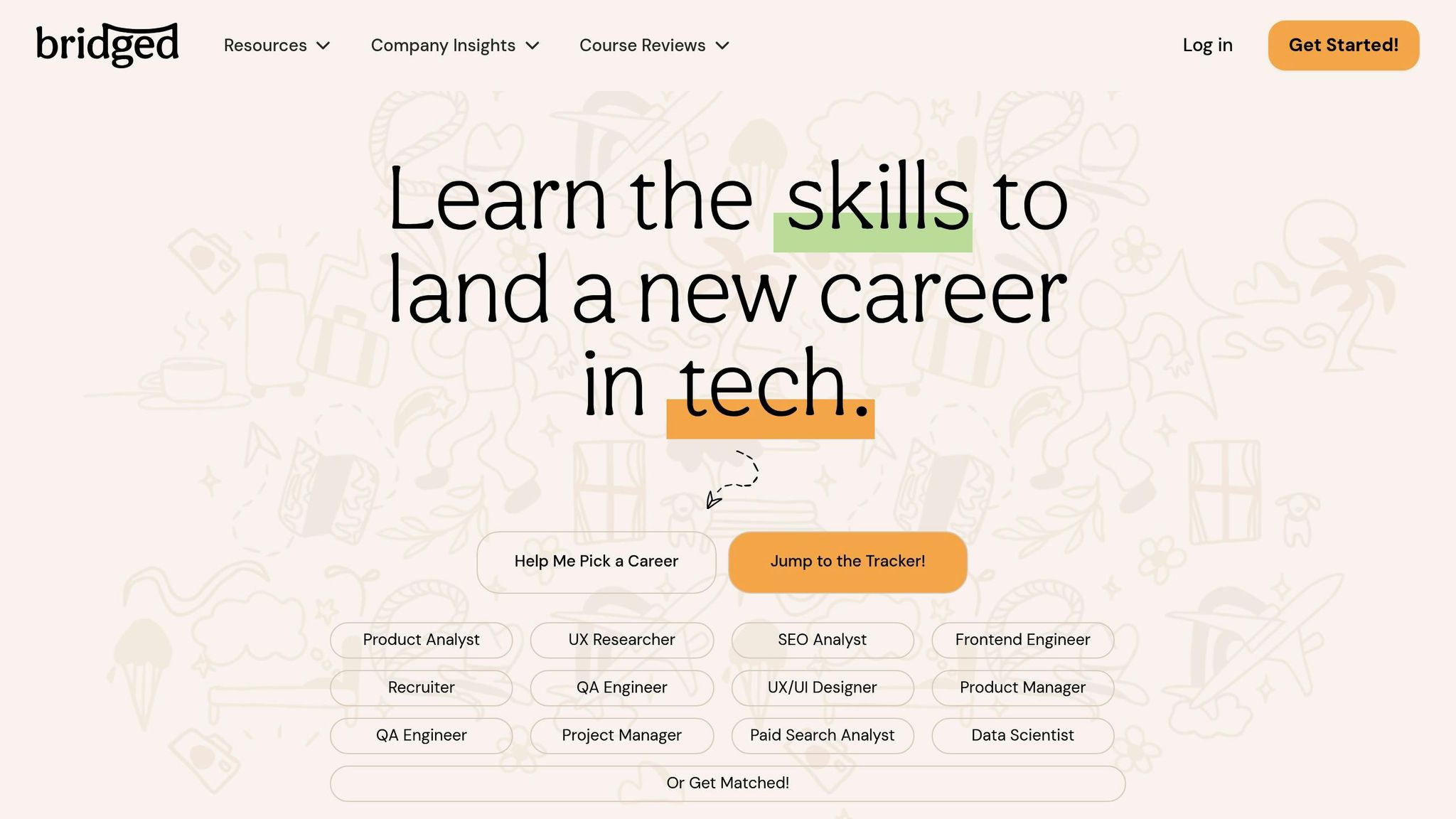
Bridged can be a valuable tool for identifying and addressing your development needs. After reviewing your manager’s feedback, use Bridged’s gap identifier to pinpoint the skills that are crucial for your current role or future career aspirations. The platform evaluates your abilities against industry benchmarks, giving you a clear roadmap for improvement.
Start by taking Bridged’s career path quiz. This tool helps you explore roles that match your skills and interests while highlighting areas for growth. It’s a great way to uncover a career trajectory that plays to your strengths while addressing the gaps identified in your feedback.
Bridged also suggests cost-effective certifications tailored to your needs. These credentials help you build expertise without the high costs of traditional bootcamps or degree programs. Plus, Bridged’s tracker feature allows you to monitor your progress, making it easier to share updates with your manager during follow-ups.
Another useful feature is Bridged’s job-matching capability. As you develop your skills, the platform connects you with opportunities at companies that value your growing expertise. This not only ties your efforts to tangible career advancement but also keeps you motivated by showing how your hard work pays off.
Keep Getting Regular Feedback
Schedule quarterly check-ins with your manager to review your progress and refine your plan. These conversations help ensure you’re applying new skills effectively and can uncover any lingering or new gaps, showing your dedication to continuous improvement.
Don’t stop at manager feedback - ask for input from peers, mentors, and other stakeholders. Their perspectives can reveal blind spots and provide a well-rounded view of your growth.
Keep a record of your achievements and challenges. Whether it’s completing a certification, applying a new skill to a project, or receiving positive feedback, documenting these moments is invaluable during performance reviews or job interviews.
Stay updated on industry trends to keep your skills relevant. According to the World Economic Forum, 50% of employees will need reskilling by 2025 due to technological advancements. Make these trends a part of your feedback discussions to identify emerging skills that could become essential.
Finally, be flexible. If priorities shift or new gaps arise, adjust your plan accordingly. Celebrate milestones along the way to stay motivated and build momentum for tackling the next challenge.
Turning Feedback Into Career Growth
Feedback from your manager can be a powerful tool for long-term career growth. When you take constructive criticism and turn it into actionable steps, you create a roadmap that aligns your career ambitions with the goals of your organization.
By now, you've likely built a structured feedback and personal learning plan. The next step? Use that foundation to drive real progress in your career. This feedback-driven approach to development - gathering insights, identifying skill gaps, and implementing focused learning strategies - lays the groundwork for consistent growth. The challenge now is to turn those insights into meaningful actions that push your career forward.
The key to staying ahead is continuous improvement, fueled by regular feedback. These periodic check-ins do more than just measure progress; they also show your dedication to growth. This kind of commitment can position you as a professional who’s ready for new challenges, promotions, and opportunities.
The numbers back this up. LinkedIn's Workplace Learning Report highlights that 94% of employees would stay longer at a company that invests in their career development. By actively seeking and applying feedback, you’re essentially creating your own career growth program - one that not only adds value to your current role but also makes you more attractive to future employers.
Taking this proactive approach also addresses a major workplace issue. Right now, only 29% of employees feel their organizations effectively help them close skill gaps. By taking charge of your own development through manager feedback, you position yourself as someone who bridges those gaps and stands out in the job market.
To make the most of this process, combine manager insights, targeted learning plans, and tools like Bridged to create a comprehensive career development strategy. This integration not only helps you meet industry demands but also maximizes your professional potential. Over time, feedback evolves from simply pointing out areas for improvement to guiding you toward the next level of excellence in your career.
FAQs
How can I clearly communicate my skill development needs to my manager during feedback sessions?
To make the most of feedback sessions and effectively discuss your skill development needs, it’s essential to come prepared. Start by taking some time to think about your current responsibilities, the challenges you’re encountering, and the specific skills you feel could use improvement. Try to pinpoint areas where growth would not only help you perform better in your role but also align with your broader career goals.
When it’s time for the conversation, express your desire to improve and invite your manager’s perspective on your performance. For example, you might say, "I’d like to enhance my abilities in [specific area]. Do you have any feedback or suggestions on how I can work on this?" This approach demonstrates initiative and encourages a constructive exchange of ideas.
Finally, don’t hesitate to ask for guidance on resources, training opportunities, or projects that could help you address those skill gaps. A proactive attitude like this can pave the way for meaningful growth and development.
What are some effective ways to make sure I capture and use all key feedback from my manager?
To make the most of your manager's feedback, start by jotting down detailed notes during or right after your feedback session. This ensures you capture the main takeaways while they’re still fresh in your mind. If anything feels unclear, don’t shy away from asking follow-up questions to fully understand their perspective.
Once you’ve gathered the feedback, break it down into actionable categories like strengths, areas where you can improve, and specific skills to develop. Consider using tools like digital notebooks, task management apps, or even a simple spreadsheet to organize and track your progress over time. Make it a habit to regularly review this feedback, look for recurring themes, and set clear, focused goals to drive your growth.
How can I decide which skill gaps to focus on first when building a development plan?
To identify and prioritize skill gaps, begin by assessing which abilities are most essential for your current job or the career path you’re aiming for. A conversation with your manager can provide valuable insight into areas that significantly affect your performance or open doors to future opportunities.
Concentrate on skills that support your goals and are directly relevant to your role or emerging industry trends. If you can, tackle gaps that are easier to address with accessible resources like certification courses or training programs. This way, you can make noticeable progress while staying focused on your career aspirations.
Related Blog Posts


